
How Juan Garibaldi Is Reading the Next Consumer-Goods Shift
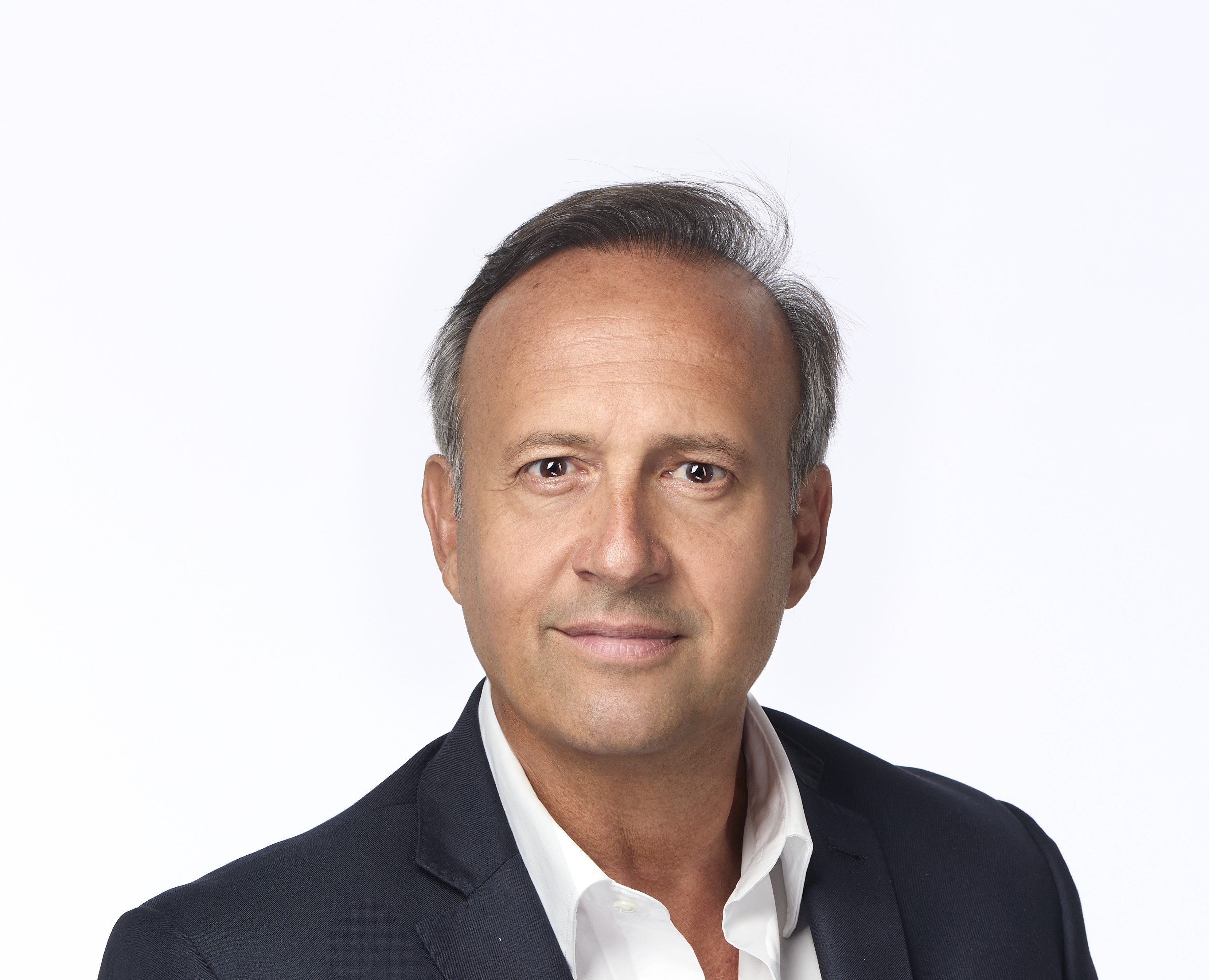
In consumer goods, leadership is no longer measured only by how effectively a company fills shelves, grows market share or protects brand equity. The sector has become more demanding than that. Consumers are more informed, more selective and more conscious of value. Supply chains must be faster and more resilient. Health, sustainability and transparency have moved from reputational language into the daily mechanics of competition. For C-Suite leaders, the challenge is not simply to respond to change, but to build businesses capable of moving with it without losing their centre.
Juan Garibaldi, CEO of Danone Cono Sur, sits at that intersection. His career has moved through marketing, regional leadership and general management, across companies including PepsiCo, Mastercard, Molinos, Clorox and Mondelez, before reaching Danone. At Danone, where the stated mission of bringing health through food touches both everyday consumption and specialised nutrition, Garibaldi’s leadership offers a window into what it now takes to compete with discipline in markets defined by pressure, complexity and changing expectations. What follows is a conversation about that discipline: how leadership is formed, tested and translated into decisions that connect people, purpose, innovation and performance.
Your career began in brand-building before moving into broader business leadership. How did that shape the CEO you are today?
My first stage in marketing was fundamental because it gave me a way of understanding the business from the consumer backwards. It taught me how brands are built, how commercial strategies are developed, and how important it is to work with clear processes, measurable objectives and a constant drive for competitiveness.
As my career evolved, I moved from functional roles into leading entire businesses, and that transition changed my perspective. Each experience gave me a different piece of the puzzle. Marketing gave me the consumer. Regional leadership gave me scale, complexity and the need to understand different markets on their own terms. General management brought all of that together, because you are responsible not only for strategy, but also for results, operations, people and culture at the same time.
Today, at Danone Cono Sur, those learnings converge. I can connect long-term vision with day-to-day business management because I have experienced those dimensions firsthand. I understand the commercial impact of decisions, but I also know that behind every number there is a team and a culture that make it possible.
That ability to read context feels especially important in markets such as Argentina. How do you lead when conditions keep changing?
Argentina trains you very well in that regard. Scenarios can change quickly, and traditional approaches do not always work. You need to have a strategy, but you also need the ability to adapt when the situation calls for a different response.
For me, the key is surrounding yourself with the right people. Challenges are solved by teams that understand the business, have the confidence to speak up, make decisions, strengthen strategies and execute efficiently. A leader cannot read everything alone. You need teams close to the market, close to the consumer and close to the signals that show where the business needs to move.
You return often to people, purpose and doing the right thing. Where do those principles sit when the business is under pressure?
They sit at the centre, especially when the business is under pressure. There are three pillars that define my management philosophy. The first is purpose. I believe companies have a responsibility to society and must rise to that challenge through a triple-impact logic: economic, social and environmental. It is not only about growing, but how we grow and what impact we generate.
The second is putting people at the centre. Talent is the true competitive differentiator. Leading means creating the conditions for others to give their best, taking care of teams and building diverse, empowered groups connected to a clear purpose.
The third, and most important, is doing the right thing. Without hesitation. Without compromise. At Danone, this is very concrete. Every product we place on the shelf reaches the tables of millions of people. In specialised nutrition, we also support different life stages, including some of the most challenging moments, such as medical treatment. When purpose is genuine and people understand it, the level of commitment is entirely different.
That makes purpose sound less like a statement and more like a management discipline. What did B Corp certification change inside the business?
The process that led Danone to achieve B Corp certification across 100% of its operations in Cono Sur was one of the most significant milestones of my career. It was not only a recognition. It required us to transform the way we make decisions, integrate sustainability into the business and measure our economic, social and environmental impact.
For us, sustainability is not an add-on. It has to be part of every link in the value chain. Danone is the largest B Corp in the world, but that is not just a label. It is a way of understanding that business and triple impact can go hand in hand.
This matters because purpose has to become execution. It has to influence the portfolio, the value chain, the way we work with teams, the way we innovate and the way we think about growth. In our case, it also connects directly with operational discipline. We have our own logistics operation, ensuring that products arrive fresh and on time at more than 100,000 points of sale. That is where purpose becomes practical: in how the company operates every day.
Once purpose becomes operational, it also has to show up in the portfolio. How are changing consumers reshaping innovation at Danone?
Consumers are paying much closer attention to what they consume. They are looking for healthier options, clearer nutritional value and products that support their lifestyles. We see this in the demand for protein-rich products, but also in the broader expectation that companies should respond to real needs, not only launch products for the sake of novelty.
A good example is Ser Pro+, the first yoghurt in the local market with 15g of protein, free of warning labels and with probiotics. Another is Yogurísimo Greek, which has been very well received for its creamy, dense texture and high protein content. But innovation also goes beyond general consumption. Specialised nutrition is a strategic pillar, with solutions such as Fortini®, Fortisip® and Ketoblend®, developed together with INTI for ketogenic therapy in cases of drug-resistant epilepsy. These initiatives allow us to address specific clinical needs while staying aligned with our purpose of bringing health through food.
That brings the conversation back to leadership itself. What will define the next phase of C-Suite leadership in consumer goods?
I believe the next phase will be defined by the ability to integrate several agendas that can no longer be treated separately. Growth, innovation, sustainability, accessibility, digitalisation, operational efficiency and consumer trust all have to move together.
Our outlook is built on three pillars. The first is a purpose-driven business model, where economic growth is aligned with social and environmental impact. The second is science-based innovation, where nutrition, health and technology converge. The third is accessibility, because one of the major challenges is ensuring that high-quality nutritional solutions reach more people. That means rethinking formats, pricing, channels and operational efficiency in increasingly challenging markets.
For leaders, this requires consistency and adaptability at the same time. You have to read the market, listen to people, anticipate change and act with discipline, but you also have to protect the essence of the business. That is where I believe the future of consumer goods is heading: towards companies that can grow, compete and innovate while caring for people, health and the planet.