
Richard Daniel Curtis and the New Language of Work
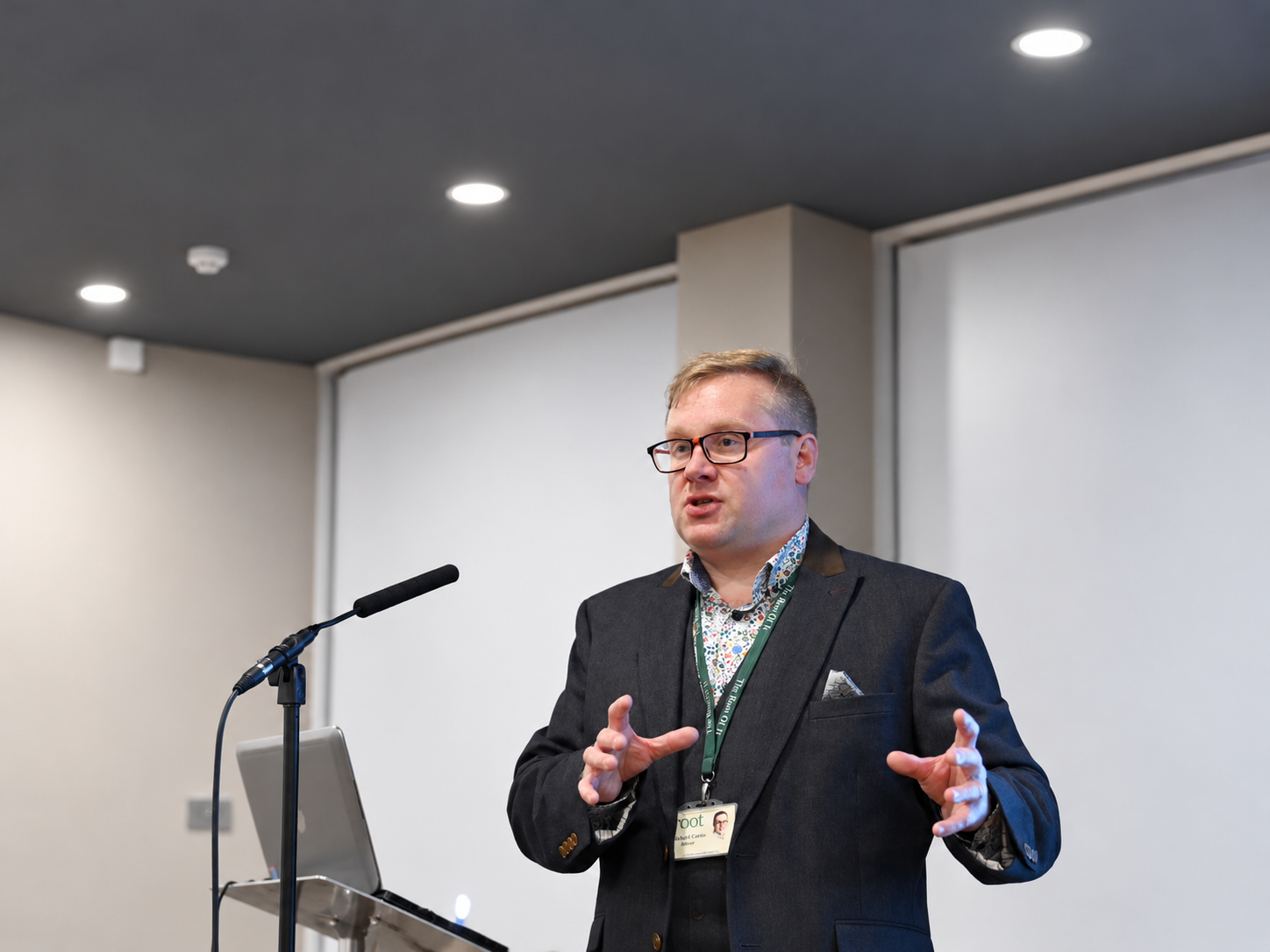
The modern workplace is learning a difficult truth: people do not become less human when they arrive at work. They bring pressure, grief, ambition, fear, fatigue, loyalty, confidence and doubt into the same spaces where strategy is discussed and performance is measured. For years, many organisations treated mental health as something adjacent to the real business of work, important enough to acknowledge, but rarely important enough to shape leadership itself. That separation is becoming harder to defend. The next generation is not simply asking for support. It is questioning the emotional contract between employer and employee.
Richard Daniel Curtis has spent much of his career inside the institutions where that contract begins to take shape. His path has moved from acute and forensic mental health wards, to classrooms, to national education guidance, and now to the executive rooms where workplace culture is set. That journey gives his work unusual force. It is not rooted in the language of corporate wellbeing alone, but in the longer, more demanding question of how people learn to understand themselves, and how institutions either help or fail them in that process.
Where the Work Began
Curtis' early career placed him close to mental health at its most exposed. In the 1990s, he worked in mental health nursing, supporting people in acute and forensic wards. These were not abstract encounters with wellbeing, nor were they softened by the distance of policy or training language. They were direct experiences of illness, care, distress and responsibility.
That beginning matters because it gave Curtis a foundation many workplace mental-health conversations lack. He saw what happens when people reach crisis, and how much is at stake when support, understanding and intervention arrive too late. His nursing career was cut short by eczema, a practical and personal disruption that forced him into another route. Yet the change did not take him away from mental health. It widened the field in which he would work.
Teaching became the next setting. In the classroom, Curtis encountered mental health before crisis had fully formed. He was now not only looking at illness, but at development: how children build emotional vocabulary, how they learn to regulate themselves, how adults interpret their behaviour, and how easily distress can be misread when the right language is absent.
The Power of Earlier Language
Curtis later became known as the “Kid Calmer”, a title that grew from his research into social and emotional development. Behind that accessible phrase was a more serious body of work: an attempt to help schools understand children not merely as learners, but as developing people whose emotional lives shape their ability to participate, trust, concentrate and grow.
His influence reached national level when, following a request from the Department for Education, he co-authored guidance for the statutory mental health curriculum in England. The importance of that work is not only that it entered classrooms. It is that it helped alter the vocabulary available to children and adults in those classrooms. In mental health, vocabulary is never cosmetic. The words people are given can determine whether distress is recognised, whether shame is reduced, and whether help becomes possible before damage deepens.
This is where Curtis' educational work becomes more than a chapter in his biography. It shows the central principle that now runs through his workplace activity: institutions change when their language changes, but only if that language is carried into behaviour. A school that speaks differently about anxiety, emotional regulation or social development can begin to see children differently. A workplace that does the same may begin to see leadership differently.
The Workplace as the Next Classroom
When Curtis founded The Root Of It in 2013, the business began with a single cheque for £750 from a client. The modest origin is worth noting because the ambition behind it was not modest. Curtis had already worked across care, education and public guidance. The workplace became the next frontier, not because it was fashionable, but because it was where the same unresolved questions were appearing in adult form.
Many companies now accept that mental health matters. Fewer have understood what that acceptance requires. Awareness days, training sessions and wellbeing statements can create visibility, but they do not automatically change how pressure is managed, how managers respond, how senior leaders make decisions, or how safely people can speak when they are struggling. Mental health becomes meaningful at work only when it moves from a message into the operating habits of the organisation.
Across The Root Of It, The Mentoring School, Skills for Progress, The Association of Mental Health in Education and Mental Health Courses, Curtis has written and delivered more than 200 training courses. The number is less important than what it reveals: a career built on translation. He takes knowledge from one setting and makes it usable in another, without losing sight of the human reality beneath it.
Leadership for the Generation Arriving
Curtis describes the current shift in work as comparable to the Industrial Revolution. The Industrial Revolution changed where people worked, how they were managed, what labour meant, and what society expected from economic life. The present transformation is different in form, but it carries a similar disturbance. Work is again being redefined around technology, mobility, identity, purpose and power.
In that context, Curtis argues that leadership must combine clear goals with empathy. This can sound simple until it is tested. Many organisations still behave as though direction and care sit in opposition, as if a business must choose between performance and humanity. Curtis’s point is sharper than that. The organisations most likely to adapt will be those that understand people strategy as central to commercial resilience, not as a decorative attachment to it.
The next generation makes this unavoidable. Curtis believes that what the current workforce has accepted, the next will not. Younger employees are already more willing to question career paths, leave poor cultures and judge employers by the quality of the working life they create. For the C-Suite, this turns mental health into a matter of competitiveness. Companies that cannot build trust, emotional credibility and humane leadership into their offer will struggle to attract and keep the people they need.
Curtis' personal ambitions return the argument to its human centre. He speaks first as a father, with his nine-year-old son and seven-year-old daughter placed before work. Beyond that, his goals are expansive: to influence mental health conversations in more than 20 countries, to change how people talk about mental health around the world, and to complete a mental-health-related book he hopes will be translated into 12 languages.
The scale matters, but so does the continuity. From wards to classrooms to boardrooms, his work has followed one conviction: people suffer when institutions lack the language, courage and discipline to see them fully. The future of workplace mental health will depend on whether leaders are prepared to learn that lesson before the next generation forces the issue for them.